Lionel Messi: The Complete Biography, Tactical Evolution, and the 2026 World Cup
The definitive, comprehensive guide to the life, career, lifestyle, and unmatched legacy of Lionel Andrés Messi. Explore everything from his childhood in Rosario to his revolutionary impact on Major League Soccer.
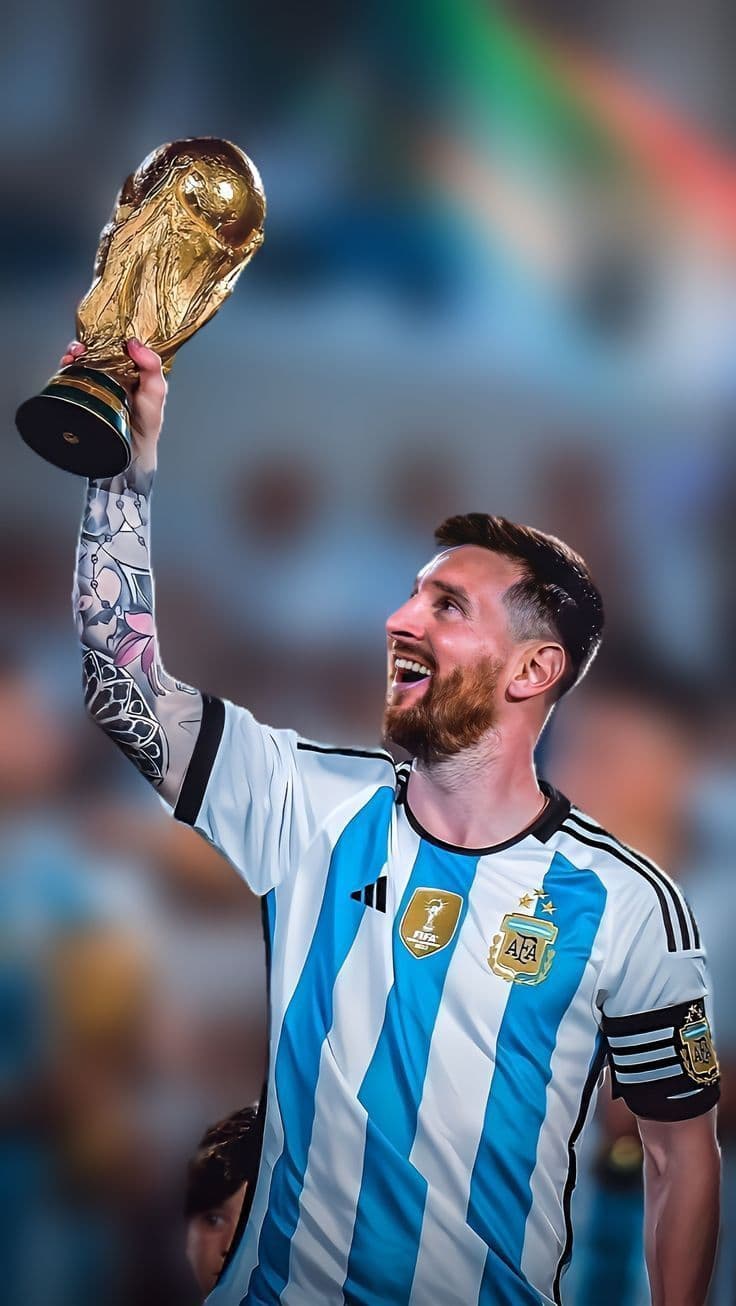
When historians look back at the 21st century, the name Lionel Messi will echo not just as a footballer, but as a global cultural icon. Born on June 24, 1987, in Rosario, Argentina, Messi has transcended the sport. His journey from a boy with a growth hormone deficiency to an eight-time Ballon d'Or winner is a story of resilience, magic, and an unnatural relationship with a football.
1. The Early Years: Rosario and the Struggle for Growth
Lionel Andrés Messi was born into a working-class family in Rosario, Santa Fe. His father, Jorge Messi, was a steel factory manager, and his mother, Celia Cuccittini, worked in a magnet manufacturing workshop. From the moment he could walk, Messi was kicking anything that resembled a ball. He joined his local club, Grandoli, at just four years old, coached by his father.
By the time he was eight, he was playing for the youth system of Newell's Old Boys. He became part of the famous "Machine of '87", a youth team that was virtually unbeatable. However, at age 10, disaster struck. Messi was diagnosed with a growth hormone deficiency (GHD).
"Without the growth hormone treatment, Messi would have likely grown to be at most 4 feet 7 inches. The treatment cost $1,000 a month, an impossible sum for his family during Argentina's economic collapse."
Local clubs like River Plate were interested in his immense talent but refused to pay for his medical treatments. Enter FC Barcelona. The Catalan club's sporting director, Carles Rexach, was made aware of the boy's talent. After watching Messi play, Rexach was so desperate to sign him that, lacking official club paper, he offered Messi his first contract on a paper napkin. The club agreed to pay for his medical treatment, and at age 13, Messi and his father relocated to Spain.
2. The FC Barcelona Era: Becoming the GOAT
Messi's progression through La Masia, Barcelona's famed youth academy, was rapid. He made his competitive first-team debut aged 17 in October 2004. Mentored by the legendary Ronaldinho, Messi inherited the number 10 shirt when the Brazilian departed in 2008. From there, under the management of Pep Guardiola, Messi became unstoppable.
He was deployed as a "false nine"—a tactical innovation that allowed him to drop deep, receive the ball, and utterly destroy opposition defenses. During the 2011-2012 season, Messi achieved something that may never be replicated: he scored 73 goals in a single European club season, and 91 goals in the 2012 calendar year, shattering Gerd Müller's long-standing record. Over his tenure, he won 10 La Liga titles, 4 Champions League titles, and became the club's all-time top scorer.
3. Iconic Matches That Forged the Legend
Messi’s career is defined by moments that seem ripped straight from a Hollywood script. Among the hundreds of incredible performances, a few stand out as culturally significant shifting points in the history of the sport:
- El Clásico 2017: The Shirt Hold
In a fiercely contested match against Real Madrid at the Bernabéu, Messi scored the winning goal in the 92nd minute—his 500th goal for Barcelona. He famously took off his shirt and held it up to the silenced Madrid crowd, instantly creating one of the most iconic photographs in sports history.
- 2015 Champions League Semi-Final vs Bayern Munich
Facing his former mentor Pep Guardiola, Messi produced a moment of magic that broke the internet. He dropped legendary defender Jérôme Boateng with an ankle-breaking feint before chipping the ball exquisitely over Manuel Neuer. It was a humiliating display of pure talent.
- 2011 Champions League Final vs Manchester United
Playing at Wembley Stadium, Messi orchestrated what many consider the most perfect team performance in history. He scored from outside the box and pulled the strings in midfield, leaving Sir Alex Ferguson trembling on the sidelines, admitting his team was simply beaten by aliens.
4. Argentina: Heartbreak to Eternal Glory
While his club career was flawless, his relationship with the Argentina National Team was historically complex. For years, he was unfairly compared to Diego Maradona. Messi led Argentina to three consecutive major finals—the 2014 World Cup, the 2015 Copa America, and the 2016 Copa America Centenario—and heartbreakingly lost all three. The immense pressure caused him to briefly retire from international football in 2016 in tears, famously stating, "The national team is over for me."
However, destiny had a different plan. He returned, and under the management of Lionel Scaloni, the curse was broken. In 2021, Messi led Argentina to win the Copa America against Brazil in the legendary Maracanã stadium. He dropped to his knees at the final whistle, bursting into tears of pure relief. It was his first major international trophy.
5. The 2022 World Cup Final Masterclass
On December 18, 2022, Lionel Messi cemented his status as the undisputed greatest of all time. In a final against France that is widely considered the greatest football match ever played, Messi scored twice.
Despite Kylian Mbappé scoring a hat-trick for France to force penalties, Messi remained ice-cold, slotting home his penalty shootout attempt with nonchalant ease. Argentina won the shootout 4-2. The image of Messi, draped in a ceremonial bisht by the Emir of Qatar, lifting the golden trophy into the Lusail night sky, instantly became one of the most iconic photographs in human history. The victory ended a 36-year drought for Argentina and secured Messi's absolute deification in his home country.
6. Tactical Evolution & Signature Moves
Messi's brilliance lies not just in his raw talent, but in his ability to evolve his game. As a teenager, he was an explosive right-winger who relied on blistering acceleration to beat defenders. Under Guardiola, he shifted centrally to the "False 9" role, creating overloads in the midfield and scoring at an unprecedented rate.
As he aged and his burst of pace naturally declined, Messi morphed into the ultimate playmaker. He drops deep into the midfield, acting as a classic "Number 10". His signature move remains the same: receiving the ball on the right side, cutting inside onto his deadly left foot, and either curling a shot into the far corner or delivering a perfectly weighted, defense-splitting pass through a non-existent gap.
His spatial awareness is unparalleled. Often criticized for "walking" during matches, tactical analysts have proven that Messi spends this time scanning the field, finding defensive blind spots, and preserving energy for explosive, high-impact bursts. He does not run without purpose; he conserves energy for when it is absolutely lethal.
7. Record Breaking: The Numbers Behind the Magic
The sheer volume of records held by Lionel Messi is staggering. His name is permanently etched into the Guinness World Records book multiple times. Some of his most absurd, seemingly unbreakable records include:
- Most goals in a calendar year: 91 (2012)
- Most Ballon d'Or awards: 8
- Most European Golden Shoes: 6
- Most goals in a single European club season: 73 (2011–12)
- Most Man of the Match awards at FIFA World Cups: 11
| Team | Appearances | Goals | Assists |
|---|---|---|---|
| FC Barcelona | 778 | 672 | 303 |
| Paris Saint-Germain | 75 | 32 | 35 |
| Inter Miami CF | 30+ | 25+ | 15+ |
| Argentina National Team | 180+ | 106+ | 56+ |
8. The Rivalry That Defined an Era
No biography of Lionel Messi is complete without mentioning Cristiano Ronaldo. The two dominated world football simultaneously, pushing each other to unimaginable heights during their overlapping time in La Liga (Messi at Barcelona, Ronaldo at Real Madrid). For almost 15 years, they essentially monopolized the Ballon d'Or and the Champions League scoring charts.
While Ronaldo is celebrated as the ultimate athlete, a relentless machine of goals, and a towering physical presence, Messi is viewed as the natural genius, the playmaker who sees the matrix of the game. The rivalry divided fanbases globally, but ultimately, it gave football fans the privilege of watching the two greatest players in history push the absolute limits of human capability. Following Messi's 2022 World Cup victory, many pundits declared the debate settled in Messi's favor, though the mutual respect between the two legends remains high.
9. The MLS Revolution: Impact on American Soccer
In the summer of 2023, Lionel Messi shocked the sporting world by rejecting massive offers from Saudi Arabia and a return to Barcelona, choosing instead to sign with Inter Miami CF in Major League Soccer.
His impact was instantaneous. He led Inter Miami, who were sitting at the bottom of the league, to the Leagues Cup title within weeks of his arrival, scoring dramatic free-kicks and dominating matches. Beyond the pitch, his arrival skyrocketed MLS subscriptions on Apple TV, sold out stadiums across the country in minutes, and fundamentally shifted the global perception of soccer in the United States ahead of the 2026 World Cup. Ticket prices for any stadium he visited soared by 1000%, a phenomenon dubbed "Messi Mania".
10. Age & Physical Longevity: Defying Father Time
Born on June 24, 1987, Lionel Messi is now in the deep twilight of his career. As a player pushes into their late 30s, the explosive burst of speed that defined their youth naturally fades. Yet, Messi has achieved something remarkable: he has completely re-engineered his game to remain the best player in the world despite his advancing age.
Rather than relying on the relentless, rapid-fire dribbling of his twenties, the older Messi operates as a strategic grandmaster. He spends large portions of matches simply walking. This is not laziness; it is intense tactical calculation. While walking, he actively scans the pitch, mapping out the opposition's defensive shape and identifying structural weaknesses. By conserving his physical energy for 85 minutes, he ensures that when he does decide to sprint for a 5-second window, he possesses maximum explosiveness.
His transition from an explosive right-winger into a deep-lying playmaker and centralized number 10 has allowed his unparalleled vision and passing range to compensate for any loss in raw pace. This extreme intelligence has given him a level of longevity rarely seen in the history of the sport.
11. The 2026 World Cup Horizon
By the time the 2026 World Cup arrives, Lionel Messi will be 39 years old. In modern football, playing at an elite level as an attacker at 39 is almost unheard of. But if anyone can defy father time, it is the Argentine Maestro.
- The Inter Miami Strategy
By moving to the MLS, Messi has stepped away from the brutal, relentless 60-game seasons of European football. He is preserving his body in the very country that will host the World Cup.
- A Specialized Role
If he plays in 2026, he may not start every game. Scaloni could utilize him as a 30-minute assassin off the bench, preserving his energy for crucial knockout moments.
- The Ultimate Swan Song
Defending the title on North American soil would perfectly cap the career of arguably the greatest player to ever step onto a football pitch.
11. Training, Diet & Physical Preparation
Messi wasn’t always a beacon of perfect health. Early in his career, he frequently suffered from muscle tears and was famously addicted to Milanesa (breaded meat), chocolates, and fizzy drinks. In 2014, following a relatively disappointing World Cup and frequent injuries, he visited Italian nutritionist Giuliano Poser.
This visit changed his career. He adopted a strict diet focused on five key foods: water, good quality olive oil, whole grains, fresh fruit, and fresh vegetables. He dramatically cut down his sugar and red meat intake (a massive sacrifice for an Argentine). This physical transformation allowed him to shed weight, regain his explosive burst over short distances, and drastically reduce his muscular injuries well into his late 30s.
12. Lifestyle, Family, and Net Worth
Off the pitch, Lionel Messi is known for being remarkably private and family-oriented, a stark contrast to many of his contemporaries.
Antonela Roccuzzo and the Kids: Messi met Antonela when he was just five years old in Rosario. They reconnected in 2008 and have been together ever since, marrying in an extravagant ceremony in Argentina in 2017. Together, they have three sons: Thiago, Mateo, and Ciro. His family is constantly seen cheering him on from the VIP boxes of stadiums around the world.
The Miami Lifestyle: Moving to Inter Miami wasn't just a sporting decision; it was a lifestyle choice. Miami offers Messi a massive Hispanic community, incredible weather, and a slightly less suffocating level of paparazzi compared to Europe. He frequently dines at high-end spots like Gekko and can be seen attending NBA games, living a relatively normal life compared to his time in Paris or Barcelona.
13. The Messi Brand: Beyond Football
As of 2024, Lionel Messi's estimated net worth exceeds $600 Million USD, and he is rapidly building an empire outside of the sport.
He holds a lifetime contract with Adidas, acting as the face of their football division globally. His move to the MLS included unprecedented corporate synergy, involving revenue-sharing agreements with both Apple TV (for league broadcasting subscriptions) and Adidas (for jersey sales). He owns a luxury hotel chain called MiM Hotels (Majestic i Messi) with properties across Spain and Andorra. He has also launched his own clothing line, the Messi Store, and recently created a holding company in Silicon Valley, Play Time, to invest in sports, media, and technology globally.
14. Philanthropy and Charity
Throughout his career, Messi has been heavily involved in charitable efforts. He founded the Leo Messi Foundation in 2007, which focuses on providing access to healthcare, education, and sports for children. Having faced medical hurdles himself as a child, he has funded research for childhood diseases, built classrooms in war-torn countries like Syria, and heavily supported hospitals in Barcelona and his native Argentina.
He has also served as a UNICEF Goodwill Ambassador since 2010, advocating for children's rights globally, and frequently donating significant portions of his own money to disaster relief efforts, such as during the COVID-19 pandemic and various earthquake crises.